Posted on 2026-10-08 16:47:58.761 +0000 UTC
Truth and Reconciliation Week at Roland Michener Secondary was a meaningful opportunity for our students to learn, listen, ask questions, and build a deeper understanding of Indigenous culture, history, and our shared responsibilities toward reconciliation.
We were honoured to welcome Chantelle Gray, a Knowledge Keeper from Edmonton, who works closely with inner-city youth and young adults. Chantelle brought a fun, engaging, and hands-on presentation focused on plants, medicines, and Indigenous teachings. Students had the opportunity to learn about the importance of plants and medicines, their connections to culture and community, and the knowledge that has been passed down through generations. Her energy and ability to connect with youth created an engaging learning experience and allowed students to experience Indigenous teachings in a meaningful and relatable way.
Our students were also privileged to welcome guests connected to Sawridge First Nation, Kikino Métis Settlement, and the Lesser Slave Lake Indian Regional Council. We welcomed Samuel Twinn, Councillor for Sawridge First Nation and from Kikino Métis Settlement; Kathy Coomber, Executive Assistant with Sawridge First Nation; and Cheryl Sheldon, Education Consultant and representative on behalf of Sawridge First Nation and the Lesser Slave Lake Indian Regional Council.
Our guests shared the 125th Anniversary of Treaty 8 documentary, providing students with an opportunity to learn more about the history, relationships, and ongoing significance of Treaty 8. We were especially honoured that RMS was the first school to have the opportunity to view this documentary. Bringing this story into our school allowed students to connect local history with the Treaty relationship that continues to shape our community today.
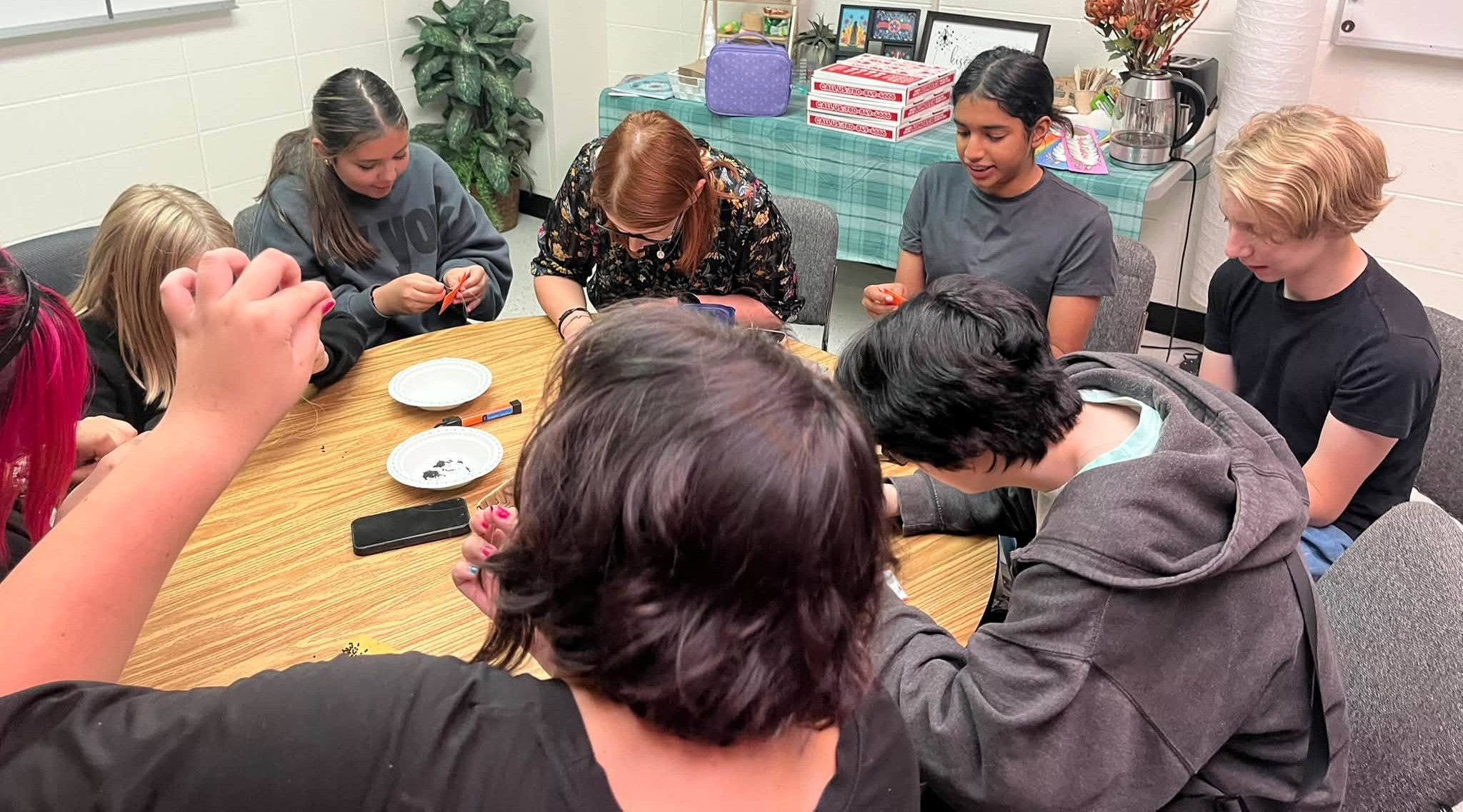
Throughout the week, Mrs. Blize, Indigenous Education Coach, created additional opportunities for students to take part in learning and reflection. During lunch-and-learns, students gathered to bead their own orange shirt pins while talking about Orange Shirt Day, the meaning of reconciliation, and how we can each contribute to respectful relationships. These informal gatherings provided a space for students to create, talk, ask questions, and reflect together.
Students and staff were also invited to participate in a school-wide Orange Shirt Reconciliation Activity. Throughout the week, orange pieces of paper were hidden around the school. Each piece contained a question, fact, or piece of information related to Orange Shirt Day, residential school history, the Truth and Reconciliation Commission, and the meaning of reconciliation. When students found a piece, they brought it back to Mrs. Blize, where it became part of something bigger.
Together, these individual pieces were assembled into a large orange shirt displayed in the school. The completed shirt became a meaningful visual representation of our week: each small piece of learning, each question, each conversation, and each person has a role in building reconciliation.
Throughout the week, our goal was to create opportunities for students to understand that reconciliation is something we build together. Through listening to Knowledge Keepers, learning about medicines and culture, hearing community perspectives, exploring the history of Treaty 8, and participating in hands-on activities, students were encouraged to think about their own role in building respectful relationships.
Truth and Reconciliation Week at RMS reminded us that learning is an important part of reconciliation, but so is listening, building relationships, honouring Indigenous voices, and continuing the learning beyond one week.
We are incredibly grateful to our Knowledge Keepers, Elders, community guests, and Mrs.Blize who helped make this week such a meaningful learning experience.